
What to know before traveling to Grand Canyon to see fall colors
All hikers and visitors should bring water and treatment options.

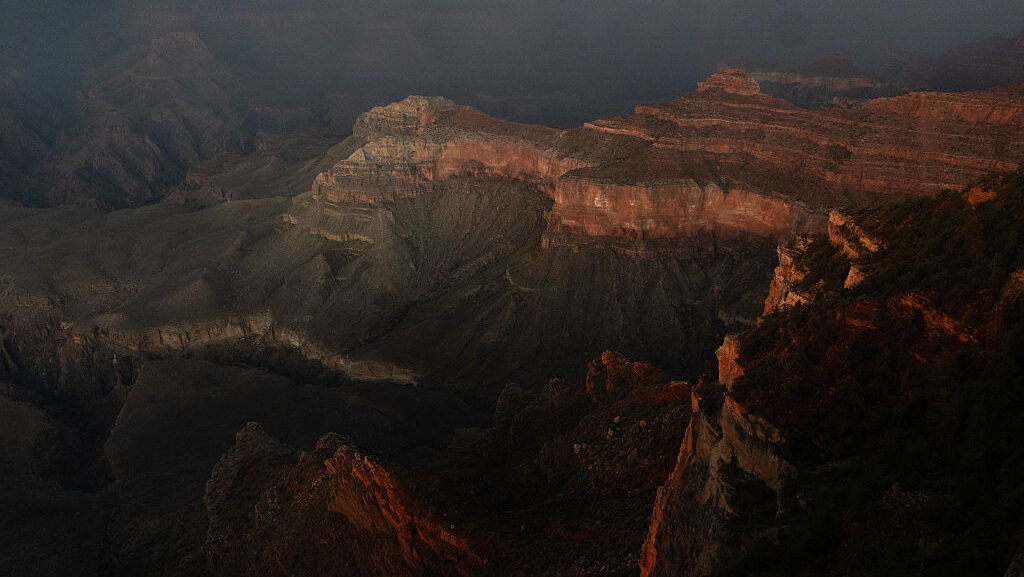
GRAND CANYON, ARIZONA - JULY 15: Smoke from a pair of wildfires burning near the North Rim mixes with rain as storm clouds slide over the Grand Canyon on July 15, 2025 in Grand Canyon, Arizona. The rain was badly needed as the fires have been burning out of control, fueled by recent strong winds, high temperatures and low humidity. (Photo by Scott Olson/Getty Images)
(Photo by Scott Olson/Getty Images)
Early October is one of the best times to see fall colors at the Grand Canyon, particularly on the North Rim’s Kaibab Plateau, but it’s important to be prepared before you make the trip.
The North Rim’s Kaibab Plateau and drives along State Route 67 and to Point Imperial give visitors the chance to see quaking aspens, and the South Rim allows visitors along the Rim Trail to experience the Gambel oaks.
Here’s a guide for what to know before you make your trip to the Grand Canyon:
South Rim
The South Rim is open and fully accessible for visitors, which includes the overlooks, museums, visitor centers and paved Rim Trail.
Visitors can go online to find select day-hiking routes below the rim that are open. Visitors should also bring their own water.
In-park lodging is closed to conserve water, but visitors can dry camp at Mather and Desert View campgrounds with reservations. Other communities are open, such as Tusayan, Williams and Flagstaff, with full lodging, dining, tours and activities.
North Rim
The North Rim is open for road and developed area access, including Jacob Lake and the North Rim Country Store for supplies. However, inner-canyon trails and lower access points remain closed.
For 18 days, starting at sunset on Oct. 15 and ending at sunrise on Nov. 3, the roads to the Cape Royal and Point Imperial overlooks will be closed for repairs and upgrade work.
Visitors can lodge at Jacob Lake Inn and Kaibab Lodge, but in-park lodging is not available.
Water restrictions
Visitors need to bring water or buy bottled water on-site and use designated portable facilities, as the park is still on Stage 4 water restrictions.
Potable water is available from temporary tanks at the South Kaibab and Bright Angel trailheads, but taps at the campgrounds on the North Rim along the inner-canyon trails are off. All hikers and visitors should bring water and treatment options.
The National Park Service hopes to start pumping water by mid-November to allow hotel concessionaires to provide services to overnight guests around Thanksgiving.
Fire restrictions
Wood burning and charcoal fires, including campfires, warming fires and charcoal barbecues, are all currently banned, as both rims are under Stage 2 fire restrictions.
What hiking trails are open?
Plateau Point Trail is open from the Tonto Trail junction to Plateau Point.
The South Kaibab Trail is open from the South Kaibab trailhead down to Tip-Off Point.
The Tonto Trail is open between Tip-Off Point and Havasupai Gardens.
No other routes are open, including Rim-to-Rim. Visitors are encouraged to check the weather before they head out, as flash flooding can occur without warning.
Related
 What’s on your ballot? Prop 141 would ban vehicle miles traveled taxes in Arizona
 Higher education could bring Arizona $11.1 billion in economic gains, report finds
 Tempe bar offering reward after man steals elk head
 Taiwan opens Phoenix office despite pressure from China
 Greg Stanton, Zudhi Jasser trade blame on affordability in 4th Congressional District debate
 Interstate 10 near Buckeye reopens after crash caused 5-hour closure

Comments
0 Comments