
Newsom vetoes measure that would have penalized the use of smart glasses to secretly record people

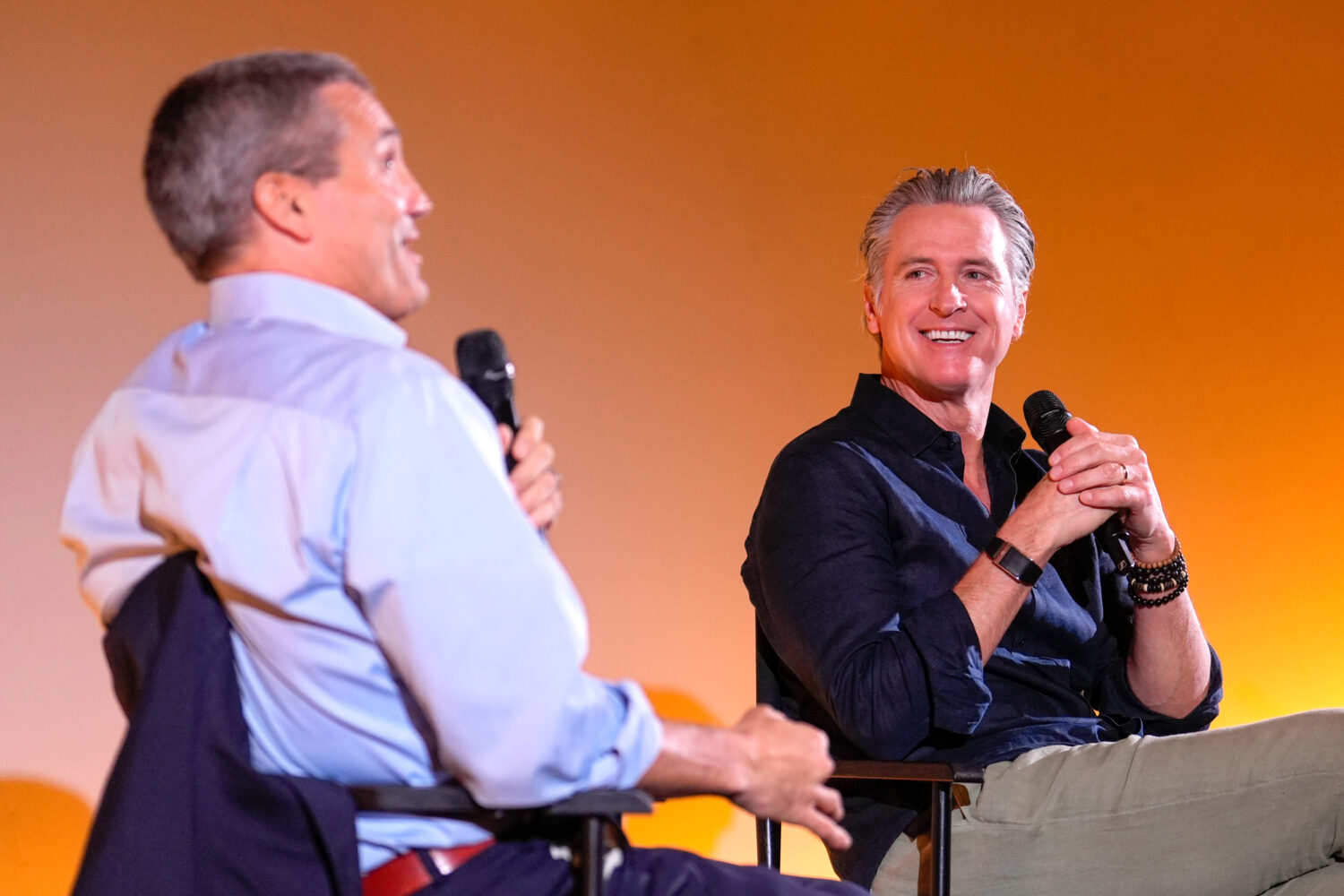
California Gov. Gavin Newsom, right, discusses environmental issues with Wade Crowfoot, head of the California Natural Resources Agency in San Francisco, Tuesday, Sept. 29, 2026. (AP Photo/Rich Pedroncelli)
Credit: AP Photo/Rich Pedroncelli
(AP Photo/Rich Pedroncelli)
SACRAMENTO, Calif. (AP) — California Gov. Gavin Newsom vetoed legislation Wednesday that would have penalized Californians for using smart glasses to record people without their permission in changing rooms, doctor’s offices and other spaces people generally consider private.
The legislation also would have required companies making smart glasses or other wearable devices, starting in 2028, to include a light or some other feature that indicates that the person is video or audio recording. It would have banned the sale of technology designed to help people conceal a recording light or sound on a smart device.
Newsom wrote in a letter explaining his decision that the bill’s definition of a wearable recording device was too broad. He noted that the state already bars people from recording someone without their consent in spaces generally considered private.
Meta Ray-Bans, smart glasses that were rolled out in 2021, have especially grown in popularity, with more than 7 million of the AI-powered devices being sold last year. State Sen. Eloise Gómez Reyes, who wrote the bill, said it would’ve helped the state respond to the technology’s rapid growth.
“Whatever we can do to protect an individual’s right to privacy, we have to do,” she said.
The bill would have been the first of its kind in the nation and built upon the state’s extensive privacy protections. California is one of about a dozen states that already requires both parties’ consent before a conversation can be recorded via audio or video.
Reyes’ proposal was designed to clarify that it applied to smart glasses and make it easier for someone to tell when those devices are recording. Any person who violated the bill by secretly recording someone would have faced prison time or fines of up to $1,500. A company that made devices that didn’t comply with the bill would’ve faced fines up to $2,500.
But TechNet, a group of executives from companies including Meta, Google and Amazon, said the legislation, known as SB 1130, would have been unfair to businesses and customers.
“California already has extensive laws governing unlawful recording, and as currently written, SB 1130 is not the right approach to addressing these concerns,” TechNet Executive Director Robert Boykin said in a statement.
Meta touted the benefits of its smart glasses in response to Newsom’s veto, including an initiative providing the devices to blinded veterans to help them read documents and identify objects.
“We’re still in the early days of building this technology and we’re committed to continuing prioritizing privacy as we build,” a Meta spokesperson said in a statement.
About a dozen states, including California, Massachusetts and Pennsylvania, require someone who wants to record a conversation to get the other person’s permission.
It’s important to strengthen privacy laws for these wearable smart devices because it’s not as obvious to tell when a person is using them to record compared to when someone is filming with their phone or a camera, said Justin Brookman, the director of technology policy for Consumer Reports.
In a letter to lawmakers earlier this year about the bill, Consumer Reports referenced a TikTok in which a woman recounted her experience getting a wax when she realized her technician was wearing smart glasses. The technician told the content creator, Aniessa Navarro, that the glasses weren’t on, but the experience was still unnerving, she said in the TikTok. The Consumer Reports letter cited a separate event in which a woman said she was secretly filmed with smart glasses at a gym and harassed online after the video was uploaded to social media.
“The stories are enough to cause alarm, and we need to do something as soon as we can,” Reyes said at the end of the legislative session.
Related
 Grand Canyon’s North Rim to transition to modified operations for fall
 Trump and Vance hit the campaign trail in deep-red areas where GOP candidates seek a boost
 Trump’s campaign against noncitizen voting demonstrates it’s rare and not enough to swing elections
 Presidents rarely visit Indian Country. Trump’s planned Choctaw Nation rally will be the latest
 Adrian Fontes, Alex Kolodin trade insults, split over mail-in voting in secretary of state debate
 Senate approves Trump’s pick to lead the Labor Department
Comments
0 Comments