
FACT FOCUS: The poverty rate is at an all-time low, but there are other factors to consider

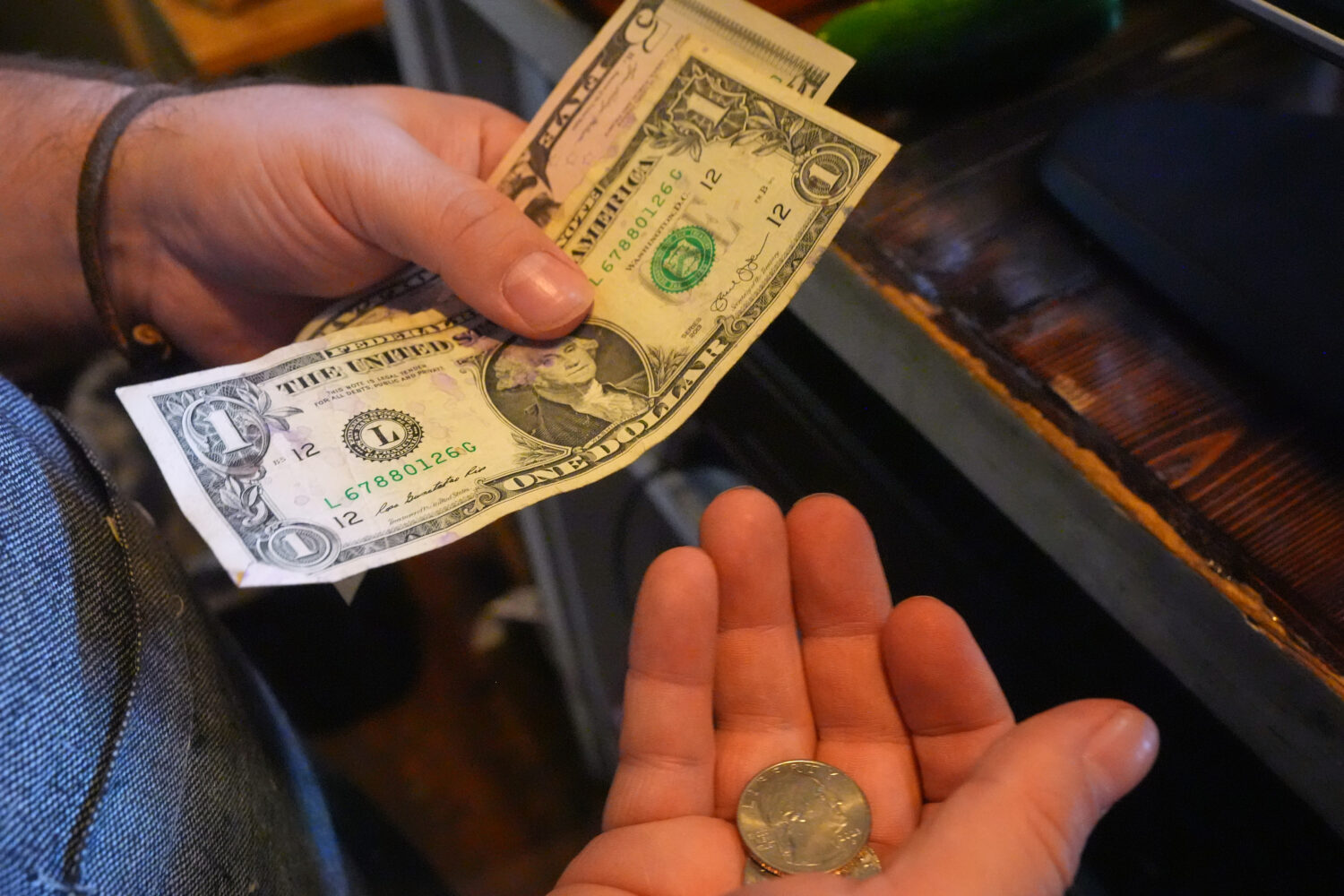
Change is made after a sale at a produce market in downtown Dallas, Tuesday, Sept. 29, 2026. (AP Photo/LM Otero)
Credit: AP Photo/LM Otero
(AP Photo/LM Otero)
President Donald Trump is adding to the economic numbers he touts, claiming the lowest poverty numbers in history.
In part, he is correct. His comments, made Sunday and again Monday, are supported by the Census Bureau’s latest annual poverty report, released earlier this month, which found that the poverty rate in 2025 was the lowest it’s been since tracking began nearly 70 years ago.
But another measure of poverty, widely regarded among experts as more comprehensive, is not at an all-time low. Plus, the 2025 poverty rate only reflects the first few months of Trump’s second administration.
Here’s a closer look at the facts.
TRUMP, on Monday: “We have the best poverty numbers in history. We have the best poverty, meaning the lowest. We have the best poverty numbers.”
THE FACTS: This is missing context. The poverty rate in 2025 was 10.2%, according to a report released this month by the Census Bureau. That’s the lowest rate on record since 1959, when the agency started tracking it. However, it was determined using a survey conducted in March of that year — only three months after Trump reentered the White House. The supplemental poverty measure, which, unlike the poverty rate, accounts for factors such as non-cash benefits like food aid and household expenses, was at 13.1% in 2025. It reached an all-time low of 7.7% in 2021, under former President Joe Biden.
“What he said is factually correct, but it’s a misleading characterization of the state of poverty,” said Steven Durlauf, a professor of public policy at the University of Chicago who studies poverty, inequality and economic growth.
In addition to what is known as the official poverty rate, the Census Bureau also examines the numbers using the supplemental poverty measure, or SPM. It accounts for resources such as SNAP benefits and Medicaid, as well as expenses such as housing and medical costs. The official poverty rate compares pretax cash income to a national poverty threshold, taking into account the size and makeup of a family.
The SPM, which has been tracked by the Census Bureau since 2009, is not a replacement for the traditional poverty rate, though it is considered more accurate by experts because of the additional factors it reflects.
“You want to have the most comprehensive vision of what the resources are that they have and what the costs are,” Durlauf said. “What it is trying to do is look more systematically at what the resources are available to a family and accounting for differences in the flows of both directions.”
Durlauf added that one reason the SPM was so low in 2021 was a temporary increase in the child tax credit under the American Rescue Plan, a COVID-era initiative. The credit expired in December 2021.
The official poverty rate fell because incomes have risen. The median U.S. household income went up 2.6% in 2025 from the previous year, after adjusting for inflation, to $87,460, according to the Census Bureau. That’s a record high, topping the 2019 household income of $85,320. Even though there are more people living below the poverty line than there have been in past years, the official poverty rate is lower because of population growth. There were 34.51 million people living below the poverty line in 2025, compared with an all-time low of 22.97 million in 1973. But while the 2025 number is larger, the U.S. population was 11.54 million higher, which drove down the rate.
Both the official poverty rate and the SPM are calculated using the Current Population Survey’s March supplement. This means that the 2025 rates are a snapshot of poverty from March of that year and don’t reflect the current economy. Trump began his second administration in January 2025, just three months prior.
“Unless he managed to make something really dramatically happen in six weeks, it’s really reflective of Biden, to the extent that we think that it’s actually driven by the presidency or not,” said Natasha Pilkauskas, an associate faculty director at the University of Michigan’s Poverty Solutions initiative.
Asked for comment on Trump’s claims, the White House directed The Associated Press to a Census Bureau press release about three of its most recent reports, including the one on poverty. The Census Bureau did not immediately respond to a request for comment.
___
Find AP Fact Checks here: https://apnews.com/APFactCheck.
Related
 Hawks? Hawkeyes? Schmitt in probing Smith mistakes basketball mascots
 Dave Ramsey says: The more things change, the more they stay the same
 Skeletal remains found in Arizona in 1980 identified as man born in 1881
 Cornell rape allegations lead to renewed scrutiny of laws on intoxication and consentPowerful drill roars to life to dig Hudson River tunnel connecting New York and New Jersey
 Hegseth is set to announce more cuts to the military’s general and admiral ranks
Comments
0 Comments