
Professor’s mission to sue ASU over DEI training goes to Arizona Supreme Court
Professor Owen Anderson wants the Arizona Supreme Court to let him sue over allegedly unlawful DEI training Arizona State University assigned him in 2023.

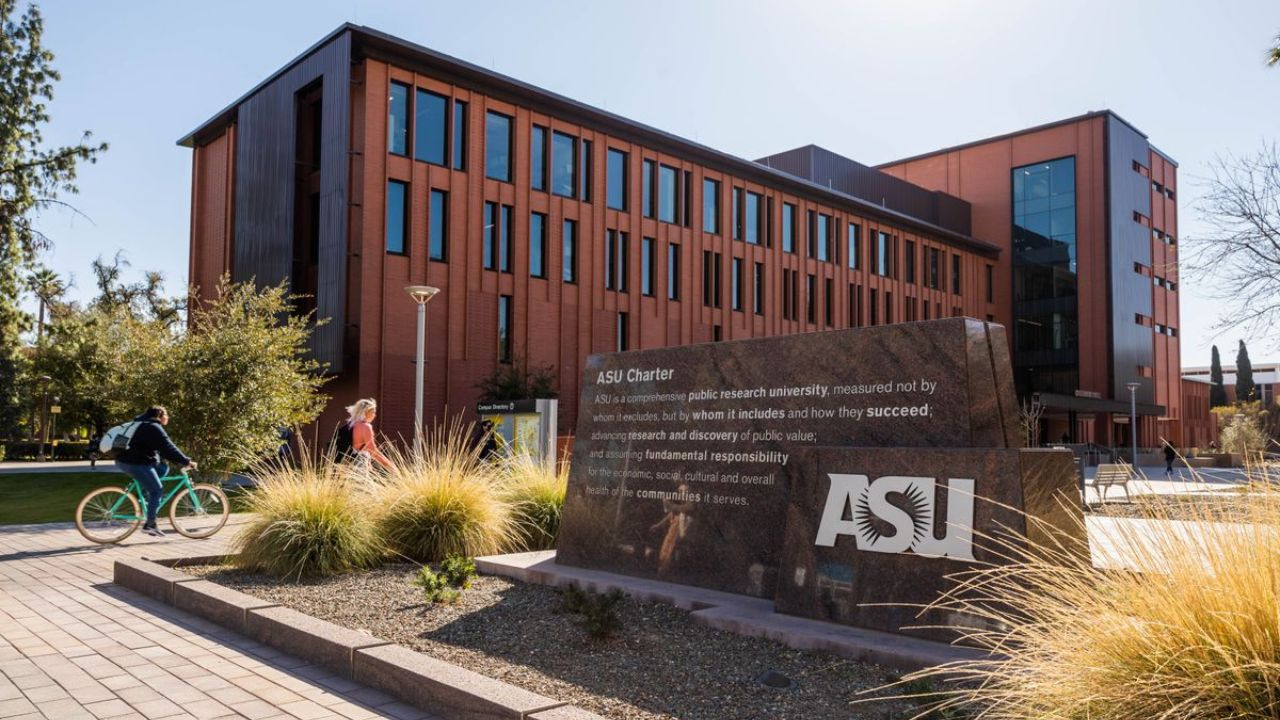
(File photo: Arizona Board of Regents)
(File photo: Arizona Board of Regents)
Owen Anderson asked the state’s high court to give him standing so he can challenge Arizona State University’s diversity, equity and inclusion requirements.
Anderson, a philosophy and religious studies teacher at ASU for 21 years, wants to sue over the DEI training employees were asked to complete in 2023.
“I believe the content is racist and discriminatory. And so, I objected to the training,” Anderson told KTAR News 92.3 FM Tuesday.
He spoke after Goldwater Institute attorneys appeared before the Arizona Supreme Court Tuesday to argue that he should be allowed to sue the Arizona Board of Regents, which governs the state’s three public universities, over the DEI training.
How did his objection to ASU’s DEI training become a legal matter?
Anderson began writing about the training on Substack. He said the Goldwater Institute then contacted him and argued that the material violated state law. Together, they sued the university.
A trial court initially allowed the case to proceed, but ASU appealed. The Arizona Court of Appeals sided with the university, finding that Anderson did not have standing to sue under the law cited in the case.
“And so, then we appealed that to the Supreme Court, which is where we’re at today, so today’s issue isn’t even about the DEI training,” Anderson said.
His case has statewide ramifications, he added.
“Today’s issue is an employment law case, which really affects every single state employee,” Anderson said.
So what exactly was argued in front of the Arizona Supreme Court?
The court is considering whether the law allows an individual state employee to bring such a lawsuit.
Anderson said Goldwater argued that although the law does not explicitly allow employees to sue, it implicitly gives them that right because the law would be ineffective without a way to enforce it. He compared it to posting speed-limit signs without allowing anyone to issue tickets.
“I was very happy with the outcome today, and, of course, we won’t know for a couple months,” Anderson said of the Supreme Court hearing. “It might be at least a month. So, we don’t know the outcome, but we’ll be waiting and looking forward to it.”
What’s the ASU professor suing hoping to accomplish?
His end goal is to proceed to trial, put ASU administrators under oath and ask them about how this DEI training came to be assigned.
“We do discovery where we get to look at ASU emails about the backdrop of this training, who put it together, who sanctioned it, what motives did they have,” Anderson said. “If we win that case, we would then have in Arizona law not only the law itself, but a case adjudicating the law and saying that ASU violated the law, and going forward, therefore, ASU would be under extreme scrutiny to make sure it doesn’t do that again.”
KTAR News 92.3 FM’s Balin Overstolz McNair contributed to this report.
Subscribe to the KTAR Eyes on Education newsletter to get our top education stories, exclusive guest interviews and more to your email inbox.
Related
 Arizona Supreme Court approves GCU College of Law without ABA accreditation
 Peoria Unified faces $650K claim over alleged sexual misconduct by Mr. ORNG
 Scottsdale Unified would have to cut $14.9M in non-classroom spending if Prop 320 passes
 100 new charges, including bestiality, submitted in Corona del Sol High School voyeurism case
 Peoria Unified Governing Board reports possible confidential information breach
 Vice President JD Vance accuses Arizona State, 8 other universities of visa abuse

Comments
5 Comments
In previous interviews this guy whines that he’s been discriminated against by colleagues for being a white male Christian conservative. More likely, his peers shun him because he’s a self-absorbed, entitled, arrogant Karen.
The poor victim doesn’t think he should be forced to learn that slaves were predominantly black and their owners predominantly white. Or that gay people, historically and currently, are marginalized and persecuted.
A white, male, Christian MAGAt whining about how oppressed and mistreated he is… Must be a day ending in Y today
The AZSC won’t even hear this case
Good little parrot