
House Republicans launch investigation into DEA tactic that allowed fentanyl to hit streets

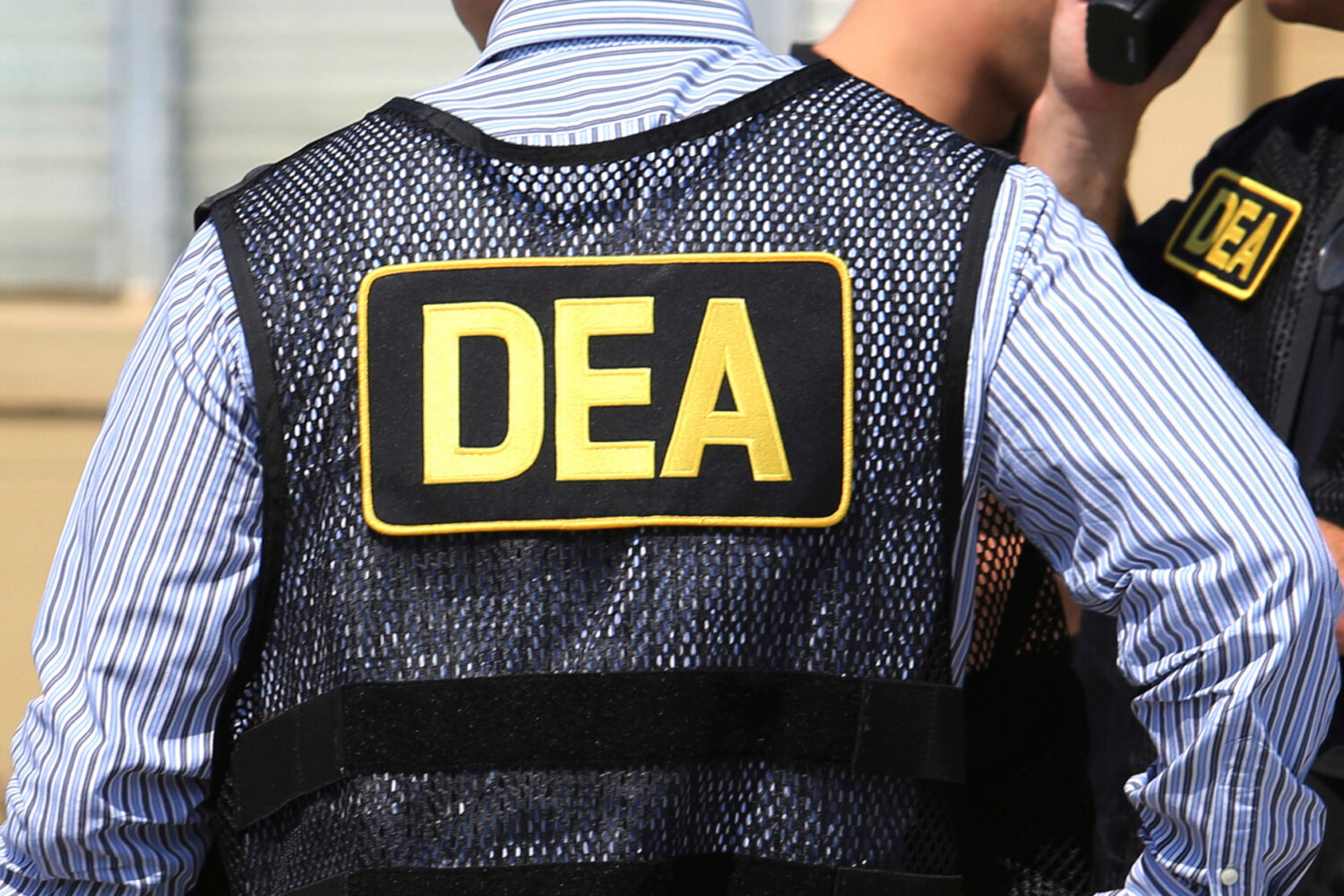
FILE - Lettering marks Drug Enforcement Administration agent's uniforms in Florida, June 13, 2016. (Joe Burbank/Orlando Sentinel via AP, File/Orlando Sentinel via AP, File)
Credit: Joe Burbank/Orlando Sentinel via AP
(Joe Burbank/Orlando Sentinel via AP, File/Orlando Sentinel via AP, File)
MIAMI (AP) — Republicans on the House Oversight Committee have launched an investigation into a controversial policing tactic that permitted staggering amounts of deadly fentanyl to reach the streets as federal authorities sought to build bigger drug cases.
The committee’s chairman, Rep. James Comer, a Republican from Kentucky, sent a letter Monday to Attorney General Todd Blanche requesting records related to the U.S. Drug Enforcement Administration’s controversial strategy of monitoring — yet not seizing — major fentanyl shipments.
The request echoes concerns raised by officials in New Mexico, the epicenter of the fentanyl crisis and where DEA whistleblowers recently reported being ordered to stand down rather than seize hundreds of thousands of fentanyl pills in possible violation of Justice Department rules intended to safeguard communities. Last week, the state’s attorney general, Raúl Torrez, sued the Justice Department seeking to force it to turn over some of the same records being sought by Republicans on Comer’s committee.
“While DEA agents may not have the resources to intercept every single known shipment, a policy directing them not to intercept significant shipments is unconscionable and undoubtedly resulted in considerable harm and lives lost,” Comer wrote in the letter, a copy of which was obtained by The Associated Press.
The lawsuit and congressional inquiry come two months after an AP investigation found DEA agents repeatedly monitored major fentanyl shipments in New Mexico between 2023 and 2025 that were allowed to hit the streets as federal authorities built out criminal cases.
The fentanyl went unseized amid the deadliest drug epidemic in U.S. history and even as DEA led a public awareness campaign — “One Pill Can Kill” — emphasizing that even a few milligrams of the substance can be lethal. Last year, the White House designated the synthetic opioid a “weapon of mass destruction.”
Comer requested records covering only the Biden administration, citing what he described as its “relaxation of fentanyl risk mitigation protocols” developed during President Donald Trump’s first term. The protocols, Comer said, should have prevented the fentanyl from hitting the streets in such large numbers.
The earlier policy, adopted in 2017, called on agents to “seize or otherwise prevent the distribution” of fentanyl “as soon as practicable.” The department rewrote those rules in 2024 to afford law enforcement far more discretion in whether to take action to prevent fentanyl trafficking, citing “the benefits to be achieved through preserving the investigation.”
AP reporting found the investigative strategy — known as allowing drugs to “walk” — continued into Trump’s second administration during the run-up to the largest fentanyl bust in DEA history, a takedown announced in May 2025 by then-Attorney General Pam Bondi.
As part of that investigation, authorities seized some 3 million fentanyl pills. But even larger quantities went unseized as agents in Albuquerque stood by and watched from helicopters and surveillance vehicles as drug couriers entered hotels with backpacks believed to be carrying as many as 100,000 fentanyl pills.
The entire network could have been dismantled six months earlier, according to a former DEA supervisor who worked on the case and is now among three whistleblowers sounding the alarm about the longstanding practice.
The Justice Department’s internal watchdog this month announced a nationwide review of government policies and wiretap investigations to determine whether federal authorities have used the same tactic elsewhere.
“Our investigations are long term and they are complex and they are done under the guidance of the law,” DEA Administrator Terry Cole said in an interview this month with Fox News welcoming the inspector general’s review. “We will continue to do that, but we need to stay 100% focused on the adversary.”
___
Mustian reported from New York.
Related
 Amazing Arizonans: Paul Yaffe rides onto the podcast, shares his biking story
 Canadian rare earth recycler Cyclic Materials raises $75M to scale U.S. production
 House lawmakers return to Washington with a stopgap funding bill atop the list of priorities
 A new generation of elm trees could be equipped to beat the disease that killed the parentsGrand Canyon braces for more storms after deadly flash flood, about 15 people still missing
Comments
0 Comments