
All eyes on Fed Chair Warsh during the central bank’s annual conclave in Jackson Hole

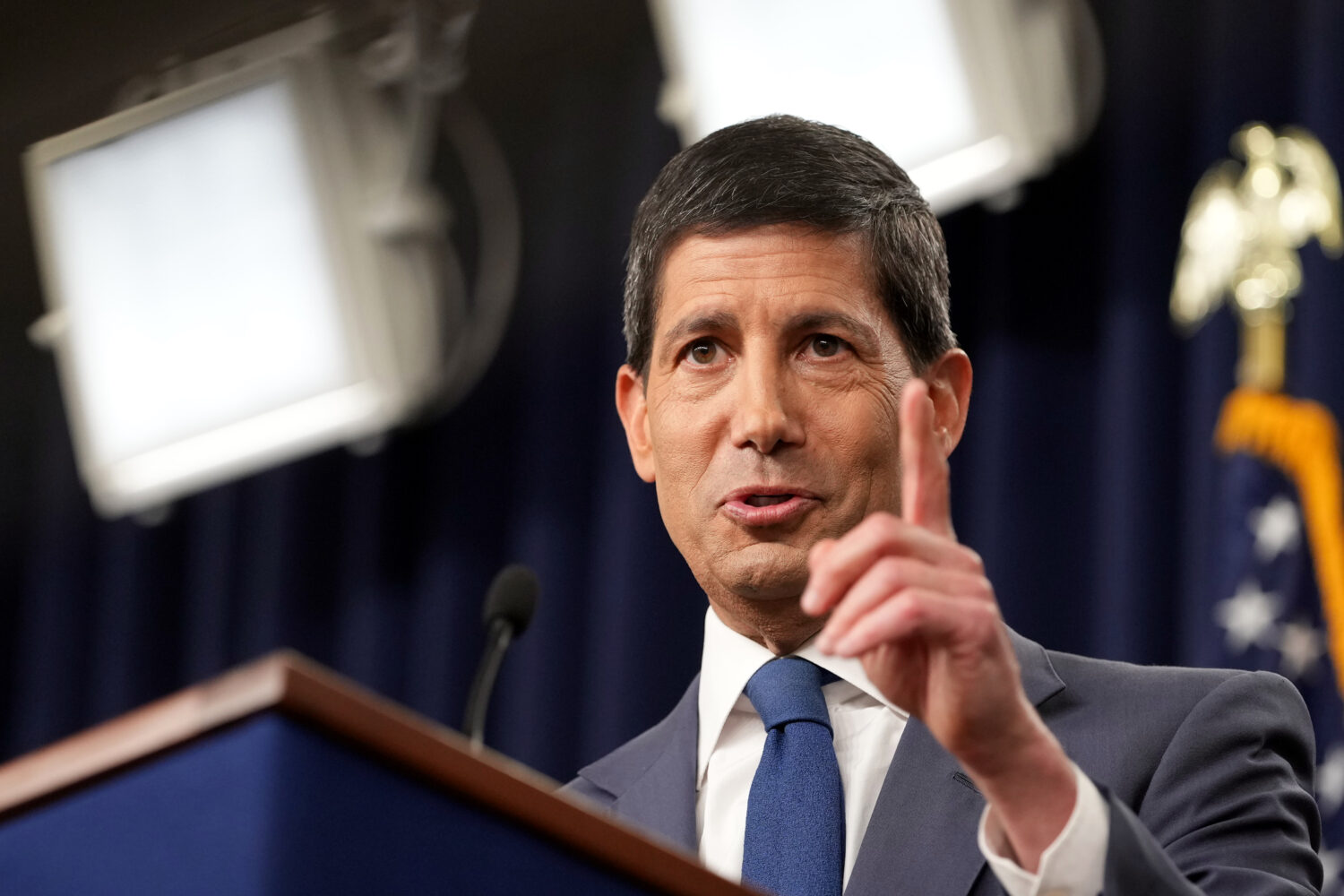
Federal Reserve Board Chairman Kevin Warsh speaks during a news conference at the Federal Reserve in Washington, Wednesday, July 29, 2026. (AP Photo/Mark Schiefelbein)
Credit: AP Photo/Mark Schiefelbein
(AP Photo/Mark Schiefelbein)
WASHINGTON (AP) — New Federal Reserve Chair Kevin Warsh has sought a lower profile than his predecessors, yet his speech Friday at the central bank’s annual conclave in Jackson Hole will be one of the most closely watched in years.
When Warsh last spoke, in a press conference in late July, he sowed confusion about his willingness to lift interest rates to combat stubbornly high inflation. Longer-term borrowing costs rose on fears that inflation could worsen.
What many economists and Wall Street analysts are hoping for is a clear signal on how he thinks the Fed should respond to the ongoing price increases that have caused pervasive gloom for many Americans.
Warsh has said he doesn’t want to provide what analysts call “forward guidance” about whether the Fed will hike or cut rates or stay on hold at upcoming meetings. He argues that it limits the Fed’s flexibility by committing it to a specific policy. He also thinks financial markets have become too dependent on such guidance.
Yet some economists argue that he could say more about his views on Fed policy without tipping his hand about future actions. The stakes are high for Warsh, who took over the Fed chairmanship May 22 after his predecessor, Jerome Powell, completed his term.
Previous Fed chairs have often used speeches at Jackson Hole to address broad questions about interest-rate policy and the economy, or to signal upcoming changes in their approach. In his first Jackson Hole speech in 2018, former chair Jerome Powell discussed the shortcomings behind central banking concepts such as “neutral” interest rates, that neither support nor hinder growth, or maximum employment.
By 2022, with pandemic-era inflation having soared to 9.1%, Powell signaled the Fed would continue to sharply raise interest rates in a fight against runaway prices, and he acknowledged that such maneuvers would bring “pain” to consumers and businesses.
Most analysts expect the Fed will keep rates unchanged when it meets next in mid-September. Wall Street investors, however, are betting the central bank will hike rates by December, according to futures pricing tracked by CME Fedwatch.
Inflation cooled in June and July after spiking in May from soaring gas prices, yet it remains above the central bank’s 2% target. According to the Fed’s preferred measure, it was 3.7% in July.
Questions swirling around Warsh have also been intensified by President Donald Trump’s continued calls for lower interest rates. While Trump has continued to defend Warsh, whom he appointed and who took office May 22, the president has criticized other Fed officials for supporting higher rates.
Trump has also renewed his efforts to remove Fed governor Lisa Cook, who was appointed by former President Joe Biden. Replacing Cook would enable Trump to appoint a majority of the seven-member board. Trump tried to fire her last year but was temporarily blocked by the Supreme Court.
If Warsh does assuage some of these concerns, longer-term interest rates could decline slightly. Those rates have steadily risen in recent weeks because of a range of factors, including burgeoning U.S. government deficits and outsize borrowing by tech firms building AI infrastructure.
The rate on the 30-year Treasury bond reached the highest level in 19 years last week, prompting an unusual effort by Treasury Secretary Scott Bessent to buy back bonds and push the yields lower.
Related
 SpaceX recovers Starship from the Indian Ocean a month after launch and is shipping it back to Texas
 New ASU medical school welcomes inaugural class, combining engineering and medicine
 President Donald Trump loses again in bid to erase his hush money conviction
 Officials provide new information about Corona del Sol High School voyeurism case
 US targets Egyptian bank’s UAE branches under new push for Iran’s economic isolation
 Judge will hear recantation of sexual abuse claim against ex-Penn State coach Jerry Sandusky
Comments
0 Comments