
Oil prices settle, Wall Street inches higher ahead of new inflation numbers due this week

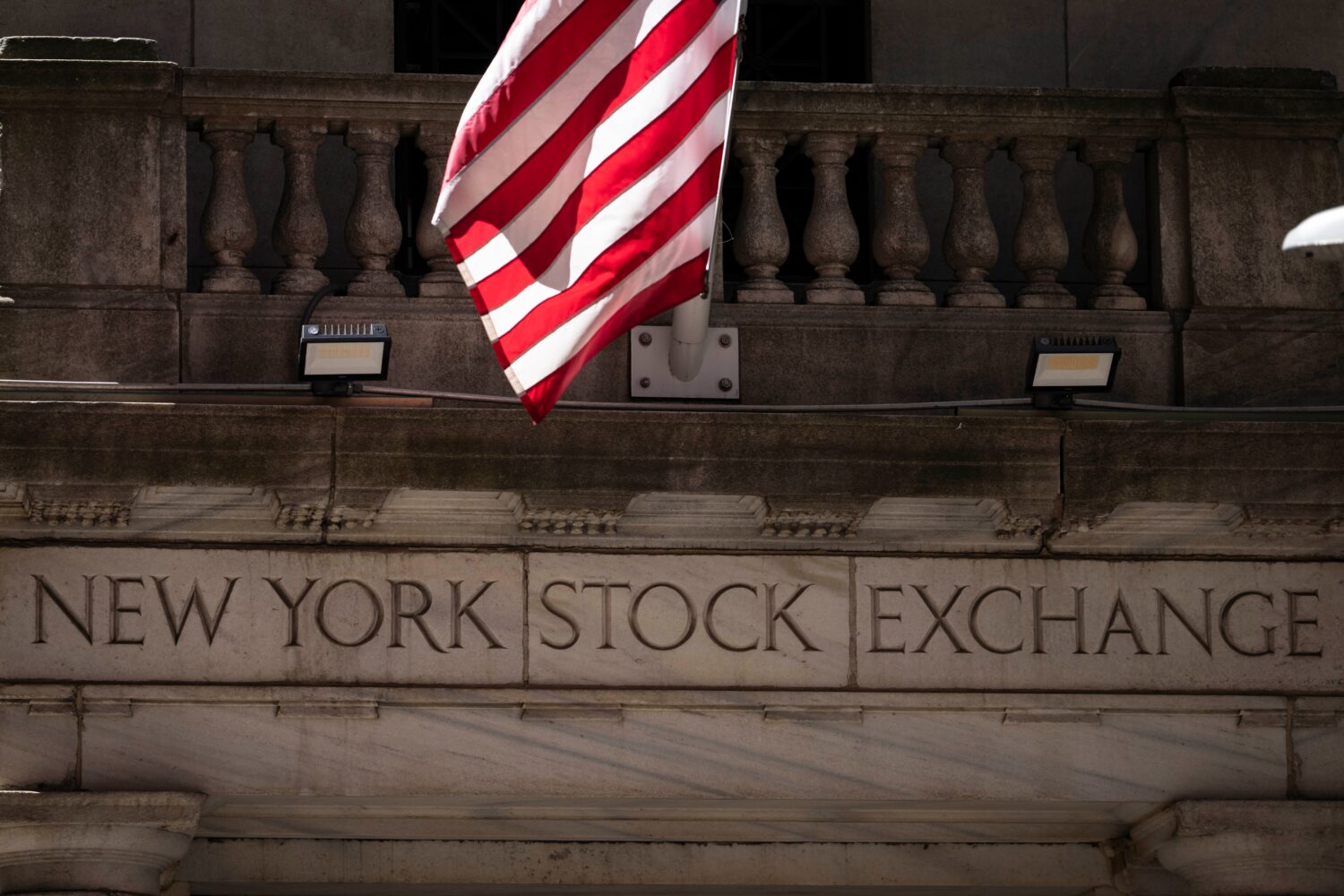
A general view shows the New York Stock Exchange, Friday, Aug. 7, 2026, in New York. (AP Photo/Yuki Iwamura)
Credit: AP Photo/Yuki Iwamura
(AP Photo/Yuki Iwamura)
Wall Street is modestly lower in premarket trading and oil prices settled despite lingering uncertainty about when the Strait of Hormuz will reopen to the global flow of oil again.
Futures for the S&P 500 ticked up 0.1% before the opening bell Tuesday, while futures for the Dow Jones Industrial Average nudged down 0.1%. Nasdaq futures rose 0.3%.
Oil prices were on their way up again before suddenly reversing course early Tuesday. After being up about 2.5% early, Brent crude oil was down a few pennies at $87.61 a barrel, while U.S. benchmark crude ticked up a couple cents to $82.19 a barrel.
A day earlier, oil jumped more than 5% after U.S. President Donald Trump scoffed at demands from Iran that the U.S. pay for devastation caused by five months of war as one condition for reopening the strait.
Shares of major U.S. oil companies — including Chevron, ExxonMobil and ConocoPhillips — were close to unchanged early Tuesday after jumping 4.5% on Monday.
Oil swung between $72 and $102 last month as hopes rose and fell that the United States and Iran could reach an agreement that would allow oil tankers to freely move through Middle East waters again to deliver crude worldwide.
Higher oil prices have meant elevated prices for gas, which trickles down to consumers on a number of levels. In addition to prices at the pump — which remain above $4 a gallon on average in the U.S. — companies have to pay more for fuel to produce and transport goods. Those higher costs usually get passed onto consumers.
The average price for a gallon of regular gasoline ticked up overnight to $4.01, according to motor club AAA.
Accordingly, the main event for Wall Street this week will be Wednesday’s update on U.S. inflation in July. Economists expect it slowed to 3.4% from 3.5% in June, and that would relieve pressure on the Federal Reserve to raise interest rates, particularly after a very weak U.S. jobs reading on Friday.
Higher rates would help keep a lid on inflation, but they would also slow the economy by making it more expensive for U.S. households and companies to borrow money. They would also undercut prices for stocks and other investments.
At midday in Europe, the CAC 40 in Paris lost 0.1%, while Germany’s DAX inched up 0.1%. In Britain, the FTSE 100 was flat.
Stocks wavered in Asia after the U.S. market edged away from its all-time highs.
South Korea’s Kospi gained 0.7% to 6,345.53 as shares in market heavyweight Samsung Electronics jumped 4.1%. Memory chipmaker SK Hynix advanced 0.4%.
The wild swings of recent weeks, driven by waxing and waning hopes for a lasting boost to corporate profits from artificial intelligence, have abated in the past several days.
“Broadly, for the Korean memory chipmakers, the past year’s chip mania could well be over, even though Korean chipmakers will continue to benefit from the massive AI build out,” Ipek Ozkardeskaya, a senior analyst at Swissquote, said in a commentary.
Markets in Tokyo were closed for a holiday.
In Hong Kong, the Hang Seng lost 1.1% to 25,652.82, while the Shanghai Composite index gave up 0.8% to 3,934.09.
Australia’s S&P/ASX 200 edged 0.2% higher to 9,250.60 after the Reserve Bank of Australia opted to keep its benchmark interest rate unchanged at 4.35%.
Taiwan’s Taiex rose 0.4% and the Sensex in India shed 0.5%.
Related
 The Latest: Trump pivots back to sanctions for Iran as other strategies to end his war fizzle
 Democratic Arizona Gov. Katie Hobbs chooses former Republican Mayor John Giles as her running mate
 Better pay would be a start for fixing Arizona’s teacher shortage, but it’s not the only solution
 Iranian-backed Houthi rebels renew attacks on key port city, and other developments in the Mideast
 Thunderstorms outside Valley bring dust, winds to Phoenix metro area
 Police investigating homicide after man dies being detained during southeast Phoenix fight
Comments
0 Comments