
Marine veteran Senator Ruben Gallego warns Iran war has no endgame
The Arizona senator says a conventional victory would cost tens of thousands of lives and faults Trump for a strategy built on hope.

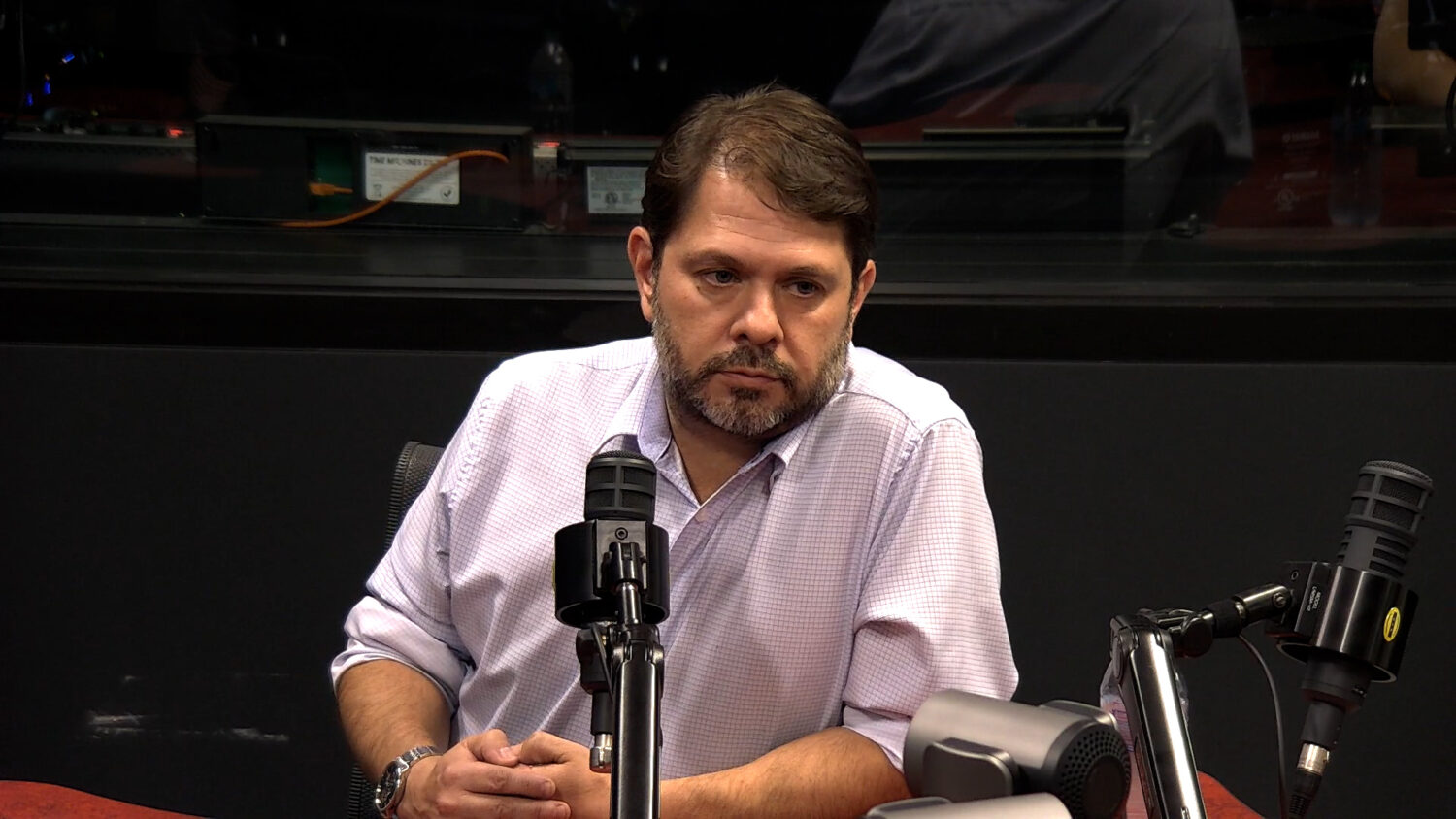
U.S. Senator Ruben Gallego discusses Iran
U.S. Sen. Ruben Gallego said the United States entered its war with Iran without a strategy for ending it and warned that a conventional victory would come at a cost he considers unacceptable.
“I don’t want to win this war, to be clear, because the way you win this war is going to cost tens of thousands of men’s lives,” the Marine veteran told KTAR News 92.3 FM’s Outspoken with Bruce & Gaydos in a wide-ranging interview Friday.
He said a traditional win would require American ground troops.
The comments came five months into the conflict and a day after Congress split on two separate efforts to rein in the war.
The House approved a nonbinding resolution 214-208 directing an end to hostilities, while a binding Senate measure failed 49 to 47.
Gallego voted for the Senate resolution.
The U.S. isn’t losing in a traditional sense, Gallego argued, but he described the position as untenable.
“We are a global superpower, and we are now being held at bay and hostage to our oil, our supply and our economy by a small country,” he said.
He faulted the Trump administration for entering the conflict without a plan for how to win it or how to get out.
“The Trump administration decided that we’re going to get into this war on the basis of hope,” Gallego said. “Hope everything’s going to go well, and we’re going to come out winning.”
Gallego said an exit will require serious diplomacy, and he questioned whether the administration has sent the right people.
“It’s going to require this president to send real negotiators,” Gallego said. “The Iranian civilization created the game of chess, and we’re sending people that figure out how to flip land as fast as possible for a buck. That’s not how you win this thing.”
Gallego said he was troubled by President Donald Trump’s statement Friday that Chinese President Xi Jinping and Russian President Vladimir Putin had assured him they would not arm Iran.
The pledge, as Trump described it, covered weapons but not intelligence.
“What really matters is the intelligence,” Gallego said. “Iran doesn’t have the capability to actually be able to have satellite imagery of what we’re doing, where we are, and how we’re moving.”
Only China and Russia would be willing to provide that, he said.
“The fact that he didn’t get any type of agreement on that is what scares me,” Gallego said. “They know what we’re doing, when we’re doing it, and where we’re moving. That could be very dangerous to our men and women in combat.”
Related
 Phoenix-area inflation up 2.5% over last year, less than national rise
 Vehicle lands upside down after crash in Phoenix leaves three hospitalized
 Arizona’s minimum wage set to increase by 50 cents in January
 Glendale finds temporary home for library after fire at downtown branch
 Suspect in custody following hours-long Mesa SWAT standoff triggered by road rage
 Man arrested on murder charge after 75-year-old found dead in Phoenix apartment

Comments
9 Comments
It happened to Trump...
after losing an election--
trying to finagle his way around the inevitable--
a riot on Capitol Hill--
he was promoted once again.
As far as success, only time will tell, that book is not written yet.
It's politics, it happens all the time.
How much more losing can we stand. I suggest we just give Florida and Louisiana to Iran and maybe they'll forgive us for invading their country.
What does Jimmy Carter and Donald Trump have in common?
They were both held hostage by Iran.