
Arizona wetlands restoration to support endangered frogs, other wildlife
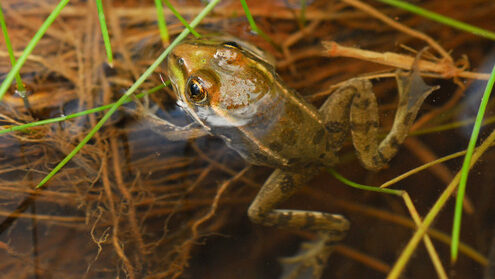
A wetlands restoration project in eastern Arizona, which has bolstered six ponds, is helping a frog species get through ongoing drought in the area.

(AZGFD photo)
(AZGFD photo)
A wetlands restoration project in eastern Arizona, which has revitalized six ponds, is helping a frog species get through ongoing drought in the area.
The Chiricahua leopard frog, which has been looked after by Arizona Game and Fish in their White Mountains Grasslands Wildlife Area since 2021, is being given a better chance to thrive in less-than-ideal conditions.
AZGFD has been attempting to lessen the effect of drought statewide since 2007 for the frogs protected under the Endangered Species Act. A total of 48 sites where the frogs dwell have been enhanced in some way or another.
“Having six ponds in close proximity to each other provides habitat redundancy for the frogs. During drought, one or more of the ponds can dry without the whole population disappearing,” Ian Latella, AZGFD ranid frogs project coordinator, said in a press release.
Severely dry conditions can negatively impact the survival of the Chiricahua leopard frog, which is native to Arizona, because “they require permanent water sources … like springs, streams, ponds and stock tanks, to thrive,” according to the release.
The frog has distinctive leopard-like spots on its body and can also be identified by “a low snore followed by soft clucking,” according to the U.S. Fish and Wildlife Service. It is also found in New Mexico and northern Mexico.
One of the six renovated ponds will be connected to a well “to ensure year-round water supply,” whereas the other five will “be filled naturally” from any rainfall.
The project is being done in collaboration with the Amphibian and Reptile Conservancy (ARC) and Wetland Restoration and Training, LLC.
“Chiricahua leopard frogs are unique to the desert and are an important part of our state’s natural heritage,” Audrey Owens, AZFD amphibians and reptiles program manager, said. “Projects like this, where we partner with other organizations to restore aquatic habitat, are critical for recovery of the leopard frog, but also improve habitat for all species that rely on water across the landscape.”
Related
 Young animals rarely abandoned by parents, officials warn people to leave them alone
 Arizona wildlife officials warn that rising temperatures could rouse rattlesnakes
 Chandler Fashion Center expanding dining lineup with La Popular Cocina Mexicana
 East Valley gym owners opening Arizona’s 1st Mahana Fresh restaurant next door
 Tucson gang member gets nearly 28 years in racketeering case tied to 2 murders
 Poll shows majority of Arizonans are against eliminating national monument lands

Comments
1 Comments
Without frogs, who is going to eat all those crickets?