
‘A spiritual fire’: RFK Jr. makes the case for faith-based addiction treatment on national tour stop
RFK Jr. outlines addiction overhaul, faith-based funding push and food pyramid critique in wide-ranging Mike Broomhead interview during Phoenix tour stop.

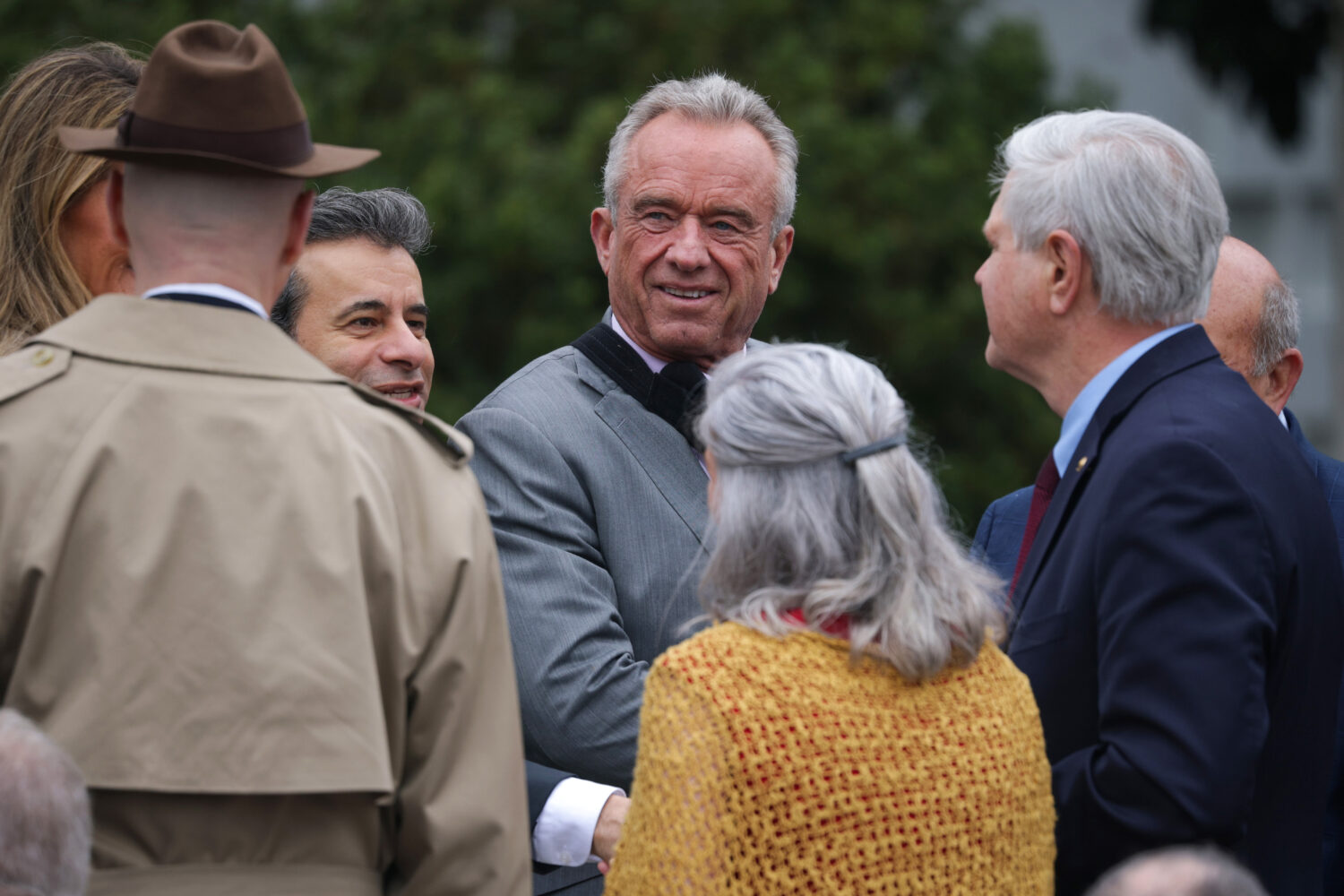
WASHINGTON, DC - MARCH 27: U.S. Secretary of Health and Human Services Robert F. Kennedy Jr. (C) attends an event with farmers on the South Lawn of the White House on March 27, 2026 in Washington, DC. President Trump is expected to announce actions to support farmers who have been impacted by ongoing trade tariffs and the current war in the Middle East. (Photo by Alex Wong/Getty Images)
(Photo by Alex Wong/Getty Images)
PHOENIX — Health and Human Services Secretary Robert F. Kennedy Jr. laid out a sweeping set of policy changes Tuesday, from restoring faith-based providers to federal addiction-treatment funding and rewriting the nation’s dietary guidelines.
Speaking on KTAR News 92.3’s The Mike Broomhead Show during a stop on the administration’s “Take Back Your Health” tour, Kennedy outlined the proposals the White House is pitching to the American public, starting with addiction treatment.
“Under the Biden administration, they got rid of faith-based care. We think the science suggests that’s a huge mistake,” Kennedy said. “Many addicts are just biologically hardwired to drink or drug themselves to death. The only thing that has been shown to overcome that is a spiritual fire.”
Kennedy drew a line between faith and formal religion.
“That doesn’t mean religion,” he said, “but it means they have to have some kind of profound spiritual realignment in order to have longterm sobriety.”
RFK Jr. proposes big changes for addiction treatment centers
The faith-based push is one piece of a broader initiative Kennedy announced Feb. 2 to overhaul federal addiction and homelessness policy.
Kennedy said the current system is badly fragmented, with law enforcement, detox centers, rehab facilities, housing providers and the Department of Labor all touching a single person’s recovery but no one tracking outcomes.
“Nobody is responsible for that addict,” he said. “The bureaucracies just check the box.”
Kennedy wants to change how rehabs are paid, shifting from a fee-for-service model to one that holds facilities accountable for outcomes.
Under the approach he described, a rehab that accepts a patient would be financially responsible for that person for a full year. If a patient relapses within a year of discharge, the facility would have to provide retreatment at no additional cost.
“I was actually at a rehab yesterday that has adopted the model that we’re trying to now proliferate nationwide,” Kennedy said. “That incentivizes them to use the most effective interventions.”
The annual cost of addiction is nearly $1 trillion a year
Kennedy framed addiction squarely as a public health problem.
“Generally speaking, addiction is a disease and we don’t jail people for having diabetes,” he said. “We need to recognize addiction as a disease to start to treat it, and that’s going to be better for society.”
He reiterated a stat that 70% to 80% of the U.S. prison population has addiction problems linked to criminal behavior. Kennedy estimated the indirect costs, which span crime, incarceration and overuse of the health care system, at roughly $950 billion a year.
Substance use disorder among people ages 12 and older rose from 7.4% in 2019 to 16.8% in 2024, according to SAMHSA survey data. Nearly 8 in 10 people with a substance use disorder in 2024 did not receive treatment.
Kennedy’s answer is early intervention.
If the government can reach addicts before they cycle through jails and emergency rooms and hold rehab providers accountable for outcomes, both crime and health care costs would drop, he said.
If we can intervene early, if we can provide them other options, and if we can help them get sober … not only crime, but also the use of our hospital system (would decline),” he said.
The food pyramid ‘lie’
Kennedy has a sharp indictment of decades of federal dietary policy, especially when it comes to nutrition.
“We essentially have been lied to by our government for the last 60 years with the dietary guidelines and the food pyramid, which were written by processed food industry lobbyists, designed to get us to eat more and more ultra-processed food, more and more highly refined carbohydrates,” he said. “We did the first science-based dietary guidelines in history. Every single one of our recommendations is cited and sourced to peer-reviewed publications.”
He singled out one product as especially problematic: children’s cereal.
“The previous dietary guidelines had put Fruit Loops at the top of the food pyramid. And it’s not even a food. It is really just poison,” Kennedy said.
He said 70% of calories in the average American diet now come from ultra-processed food. He linked that directly to what he called the worst chronic disease burden of any nation in the world.
HHS is also funding community programs that teach people to shop, equip their kitchens and prepare meals together, part of what Kennedy framed as a deeper mission.
“It’s about addressing the spiritual malaise that we have in this country of isolation,” he said.
Related
 RFK Jr. makes food sound like a miracle drug. Researchers say he often overstates the science
 A judge’s ruling halts momentum on RFK Jr.'s vaccine agenda
 Kris Mayes leads new lawsuit challenging RFK Jr.'s changes to childhood vaccine policies
 RFK Jr. fought pesticides for years. Now he's backing their production
 RFK Jr. pledged more transparency. Here's what the public doesn't know anymore
 East Valley gym owners opening Arizona’s 1st Mahana Fresh restaurant next door

Comments
36 Comments
A hard-wired addiction has been successfully treated by total abstinence - let's give credit to the tens of millions who have led "normal" lives through AA.
Just isn’t ready to deal with it yet.
That would be a good start dumbazz don't you think