
University of Arizona gets grant to develop valley fever vaccine for dogs
The University of Arizona received a $4.8 million federal grant to develop a valley fever vaccine for dogs that could one day be used in humans.

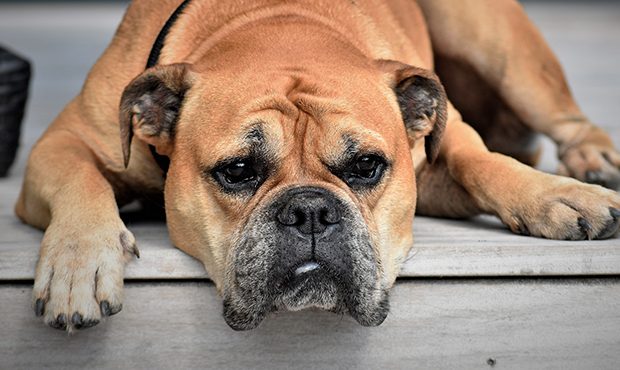
(Public Domain Photo)
(Public Domain Photo)
PHOENIX — The University of Arizona received a $4.8 million federal grant to develop a valley fever vaccine for dogs that could one day be used in humans.
Dr. John Galgiani, the founder of the school’s Valley Fever Center for Excellence, said the grant from the National Institute of Allergy and Infectious Diseases will help get the vaccine developed faster.
“We’re hoping that, within four or five years, a vaccine will be available to start using in dogs,” he said, adding that Colorado State University was assisting him with the vaccine.
Valley fever is contracted by breathing in spores that are found in soil. When dirt gets kicked up, spores can as well.
“If there was a vaccine to prevent those exposures from causing disease, that would be an enormous benefit,” Galgiani said.
Dogs have a higher chance of being infected by valley fever than humans. Another Arizona-based study showed boxers and golden retrievers were affected more by the sickness than other species.
“Studies done by the Valley Fever Center have shown that dogs have roughly three times as likely a chance of getting infected as humans,” Galgiani said.
Symptoms in dogs include a dry cough, fever, lack of appetite and lethargy. Joints and nerves can also be affected.
Infected humans can also have a fever, cough, fatigue or achy joints. They may also experience night sweats and a red, spotty ash.
While Galgiani’s main goal was to develop a vaccine for dogs, he said it could one day be used to treat people.
“We really think the vaccine might also be useful to prevent valley fever in humans as well, but our first target is to try to get a vaccine approved by the U.S. Department of Agriculture to use in dogs,” he said.
KTAR News’ Bob McClay contributed to this report.

Comments
6 Comments
That is awesome!
"night sweats and a red, spotty ash."....keep up the good work KTAR
Please include a special vaccine for pit bulls....